ITINERARY
Study Weekend in Medieval Kyiv
In association with ETR, Lausanne, Switzerland
Hotel
CANCELLED
Inclusive of airfares, hotel accommodation, transport, museum charges, breakfast and dinners
day one
Transfer to hotel by private coach. Evening lecture followed by dinner at the hotel.
day two
Sophia Cathedral, 11th century
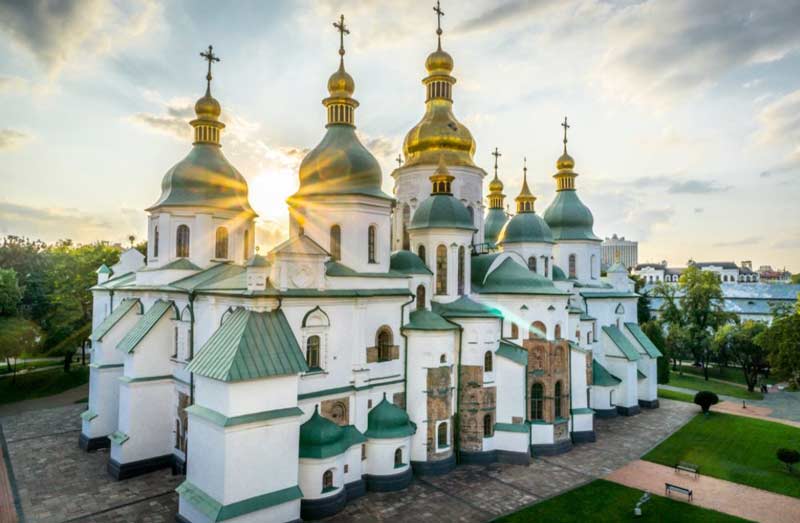
The 17th century baroque exterior of the cathedral does little to prepare one for the Byzantine splendour of its interior.
The thirteen-domed cathedral was founded in 1011 by Vladimir the Great and completed in the reign of his son Yaroslavl the Wise in 1054. Vladimir was Grand Prince of Kyiv, Prince of Novgorod and ruler of Kyivan Rus. His conversion to Christianity in 988 was the spark that ignited Christianity in all of Ukraine and the Russian Lands and for this he is known as Saint Vladimir. He formed a military alliance with the Byzantine Emperor Basil II whose sister Anna he married. In the 11th century a Byzantine princess was the greatest possible prize in the dynastic marriage market and none had ever married a Pagan. The subsequent conversion of the Slavs and the establishment of Christian culture and way of life was a major turning point in world history.
The cathedral, named after Hagia Sophia in Constantinople, is primarily Byzantine in inspiration though some historians prefer to classify it as a monument of the pre-Mongolian art of Kyivan Rus. The interior is notable for the grandeur of its space and its 11th century Byzantine mosaics.
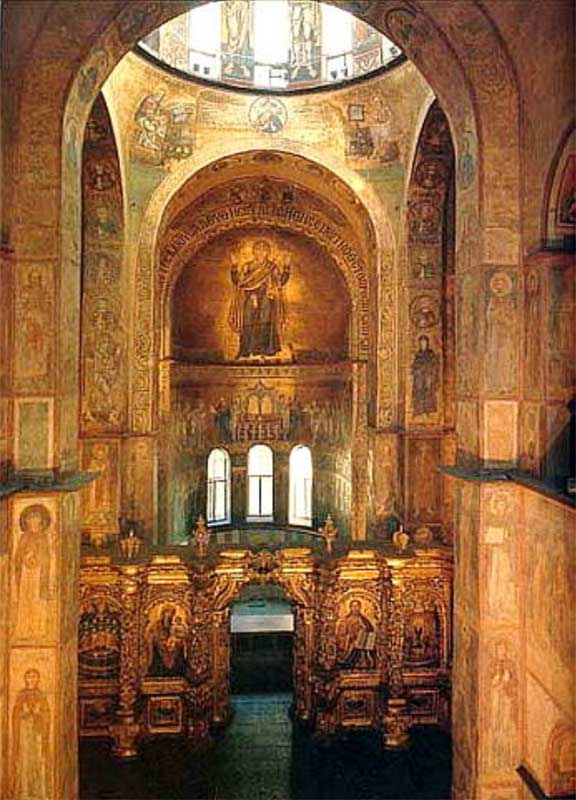
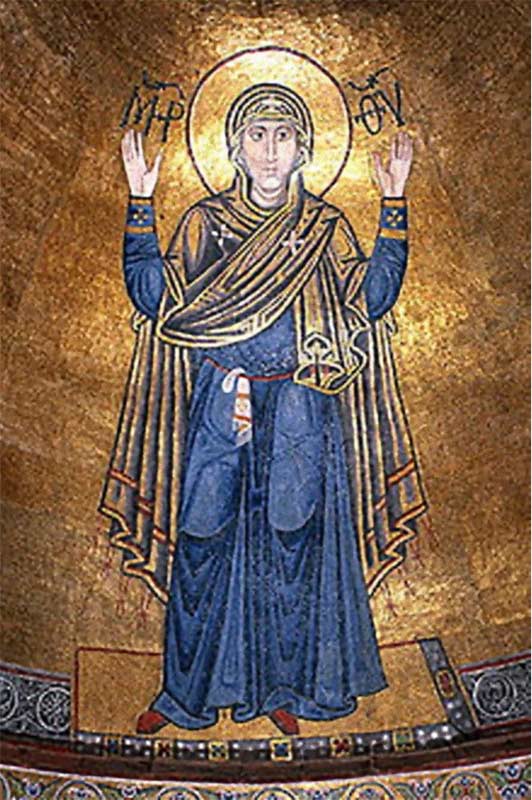
Sophia Cathedral mosaic, 6 metre high Virgin Orans, 11th century. All the mosaics are in the Byzantine style and were probably done by artists from Constantinople. It was by far the most expensive material and, the sign of immense wealth, it conferred great prestige.
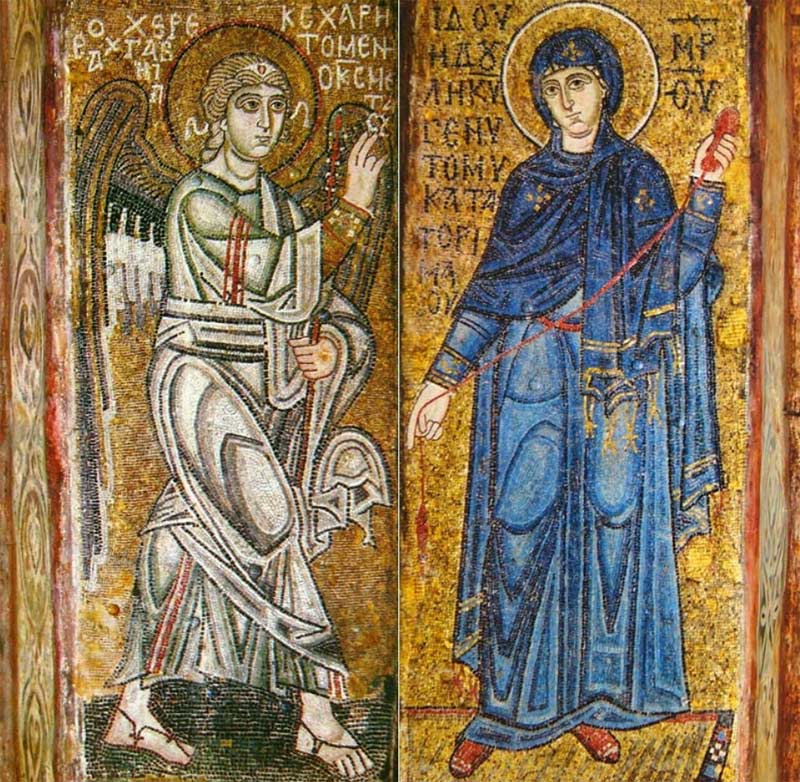
Sophia Cathedral mosaic, Annunciation. 11th century.
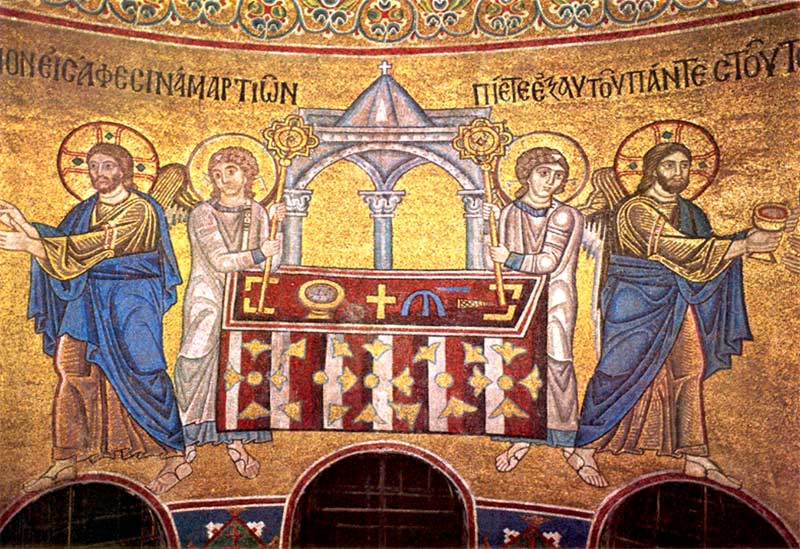
Sophia Cathedral mosaic, Communion of the Apostles, detail. 11th century.
Rastrelli’s Church of Saint Andrew, 1767
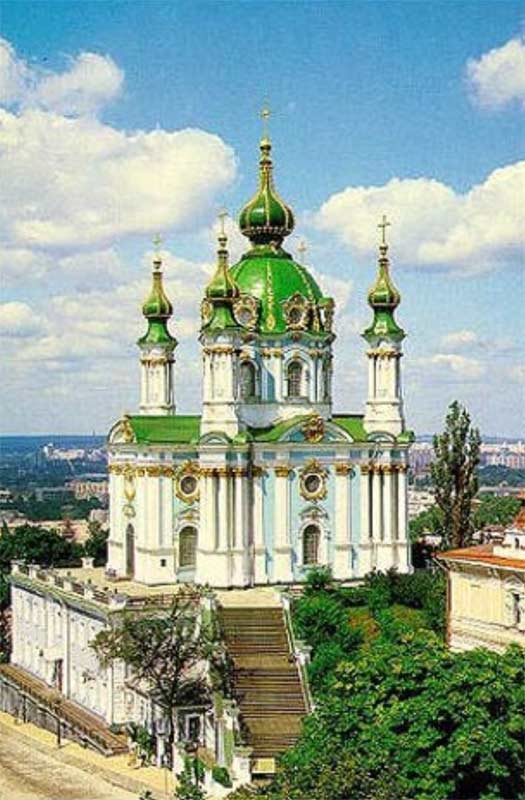
The church of Saint Andrew, completed by Rastrelli in 1767, honours the tradition that the Apostle Andrew preached Christianity to the Slavs on the banks of the Dnieper. Francesco Bartolomeo Rastrelli, the supreme master of the Russian Baroque style, had built the Winter Palace in St Petersburg and the Catherine Palace at Tsarskoye Selo. Many consider the St Andrew church to be among his greatest masterpieces.
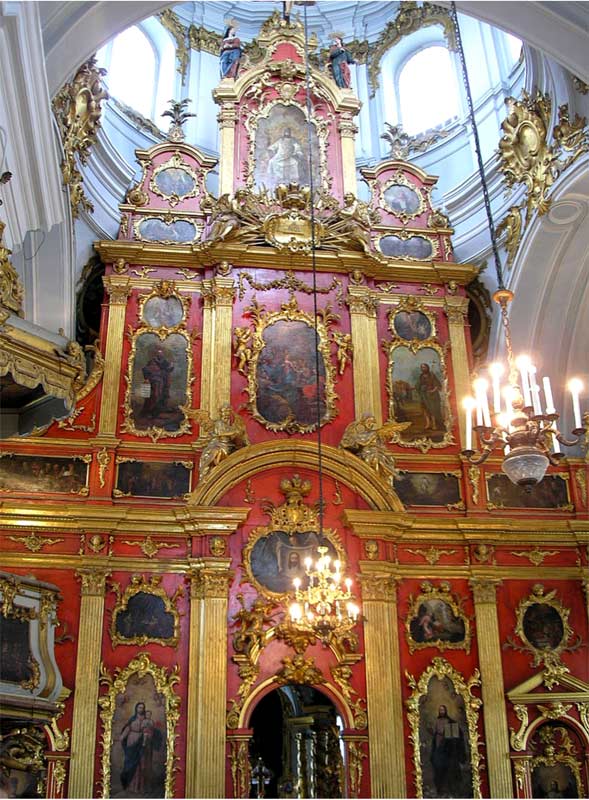
Church of St Andrew. Interior view with iconostasis.
Bogdan and Varvara Khanenko National Museum of Arts (Museum of Western and Oriental Art)
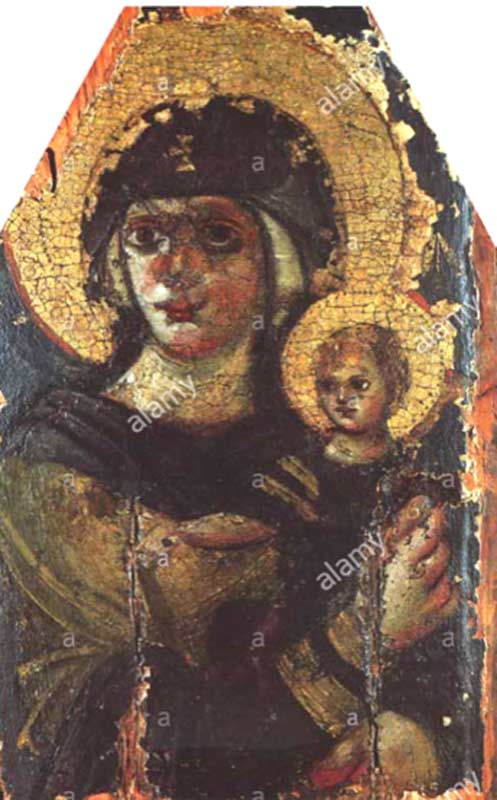
Also important for the study of icons is the Khanenko Collection situated in a magnificent ‘Merchant’s House’ of the 19th century. It has four Pre-Iconoclast
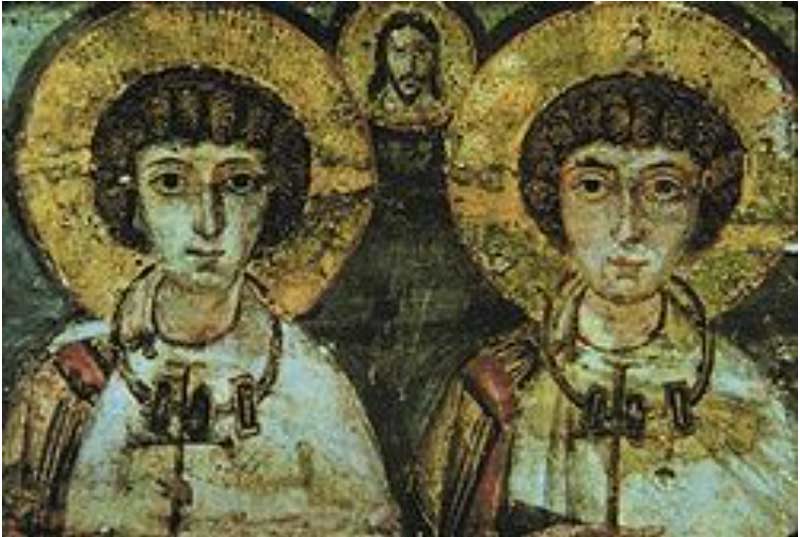
Icons of the 6th century taken from Saint Catherine’s Monastery Sinai by Archbishop Porphiry Uspensky in 1846.
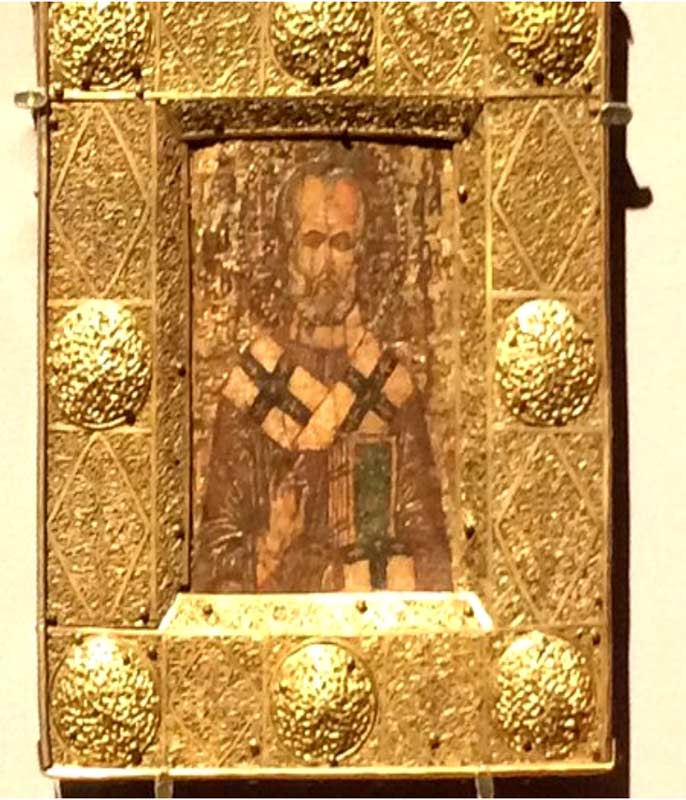
14th century Byzantine Saint Nicholas
Return to hotel for evening lecture followed by dinner at a local Kiev style restaurant.
day three
Kyiv Pechersk Lavra (Monastery of the Caves)
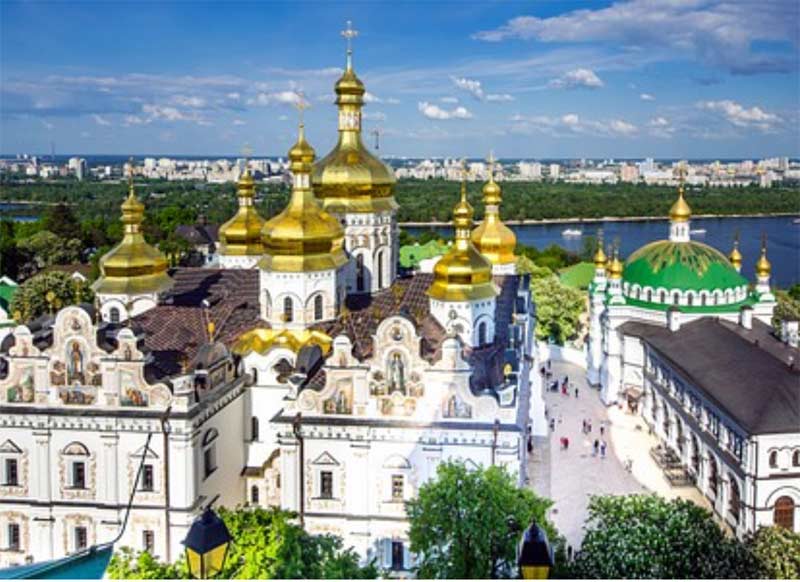
After Sergeiev Posad, the great monastery not far from Moscow that holds the relics of Saint Sergius, the Pechersk Lavra (Monastery of the Caves) of Kyiv is the next most holy pilgrimage centre in the Slav world. Found in 1061 it has known much turbulence over the centuries including its near total destruction in 1941.
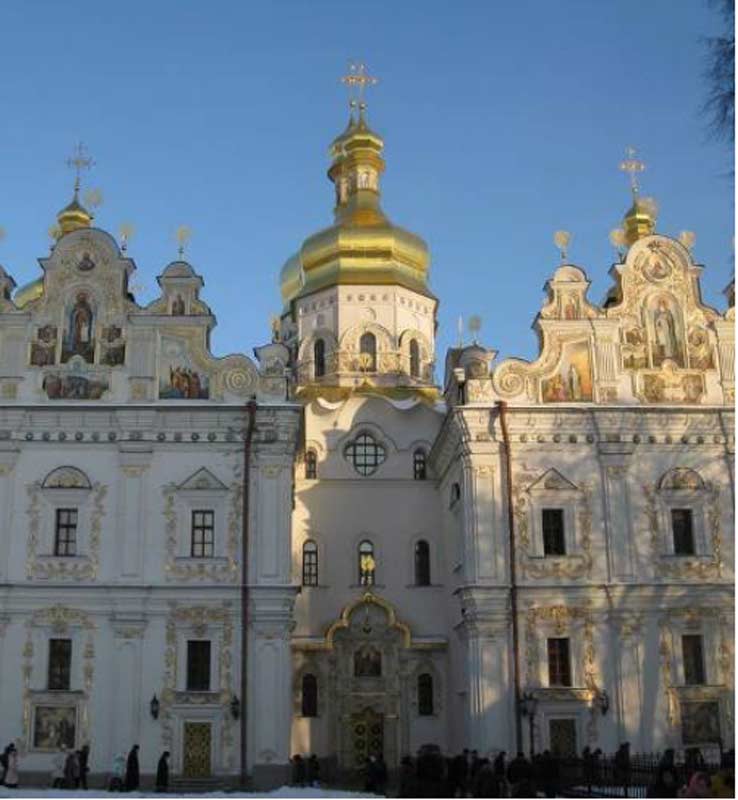
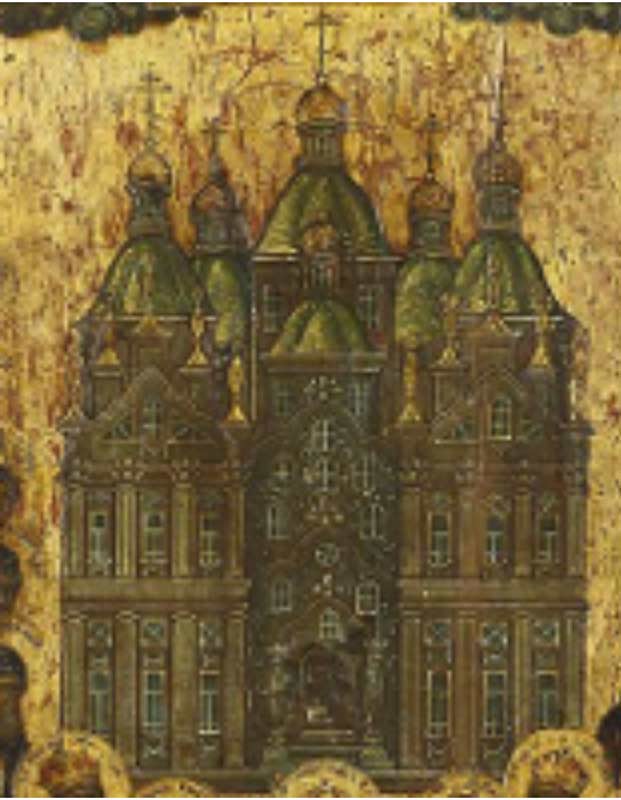
Perchesk Lavra. The Dormition Cathedral was destroyed in WW11 and recently rebuilt. Next to it, its image depicted on a 19th century icon.
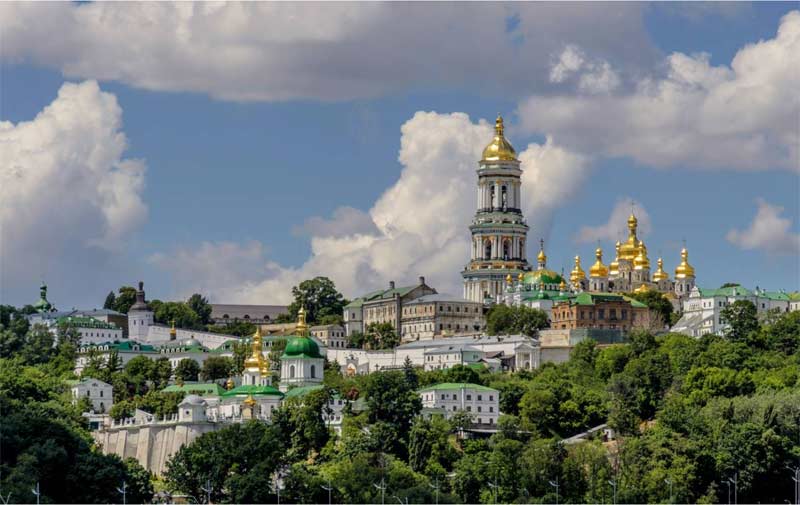
Monastery of the Caves, Kyiv, panoramic view.
Tsar Alexander II described Kyiv as ‘The Jerusalem of Slavic Lands’. With its UNESCO World Heritage sites, the Sophia Cathedral and the Monastery of the Caves, Kyiv is a monument of outstanding pre-eminence in medieval history and Eastern Orthodox Christianity.
Kyiv, strategically situated on the River Dnieper, received its culture from Constantinople whose civilisation at that time was superior to any city in Europe. Such was the prestige of Kyiv that Anna of Kyiv, daughter of Yaroslavl the Wise, would marry Henry I in 1051 and become Queen of France.
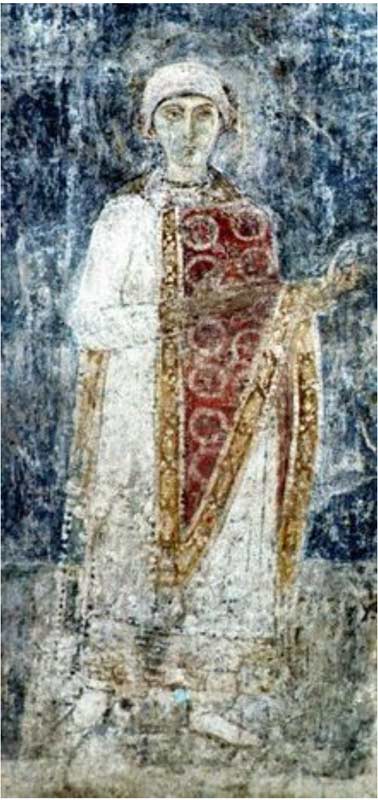
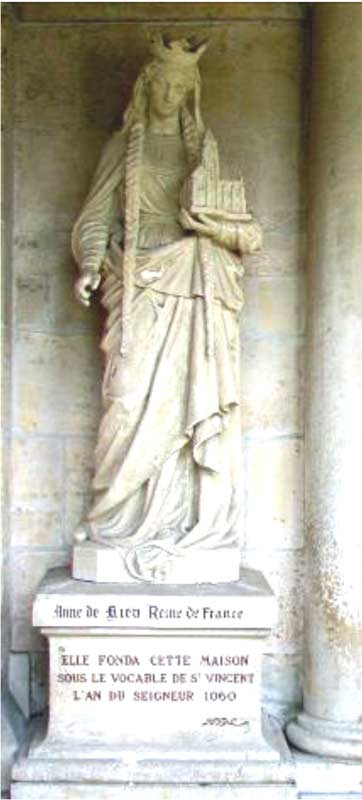
Two images of the daughter of Prince Yaroslavl the Wise. One, as Princess Anna of Kyiv from a fresco in Saint Sophia Cathedral, the other as Queen Anne of France. She was crowned in Reims Cathedral.
Museum of Folk Art
Return to hotel for evening lecture followed by dinner at a local Kiev style restaurant.
day four
Guests have the option of an early start in order to attend the liturgy from 7.00am to 9.00am and hear The Choir of the St. Jonah’s Monastery of the Holy Trinity
National Museum of Russian Art
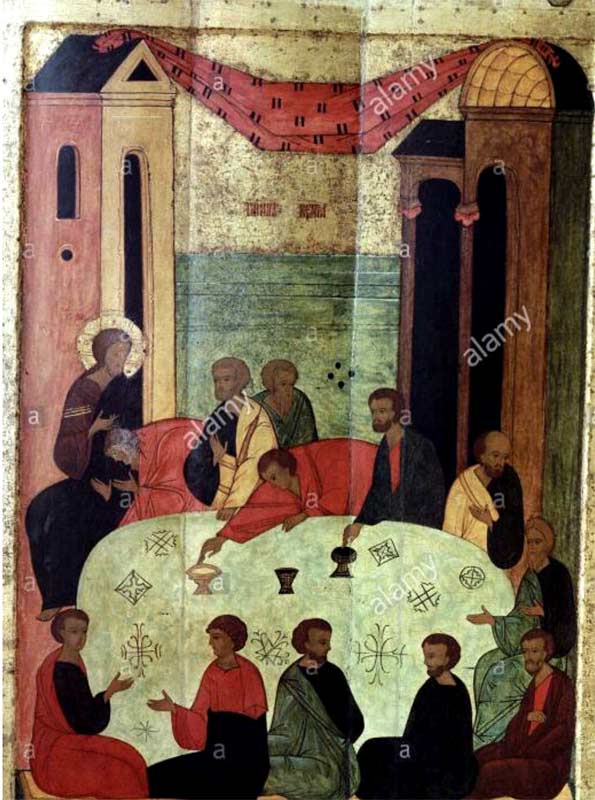
The Last Supper. Monumental icon of the 15th century Novgorod School.
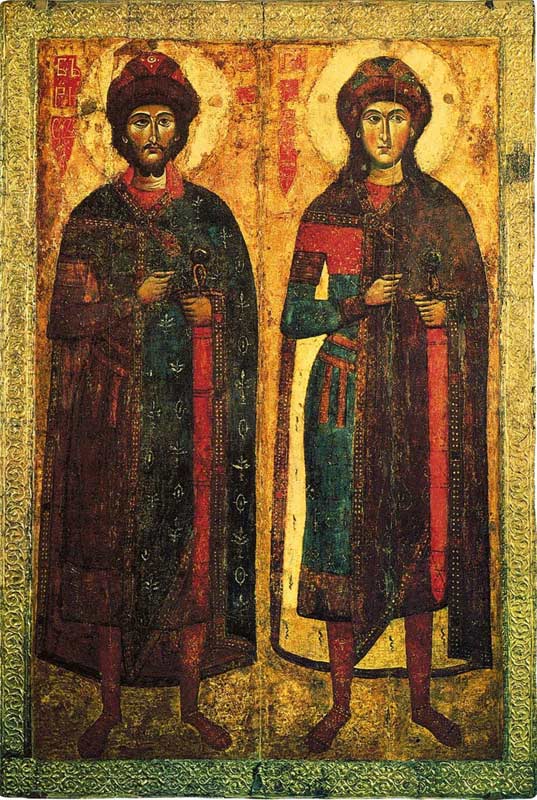
Monumental icon of Saints Boris and Gleb, circa 1300. Sons of Vladimir the Great they were murdered, probably by their brother Sviatopolk the Accursed, in the dynastic wars around 1017. They were considered martyrs and sanctified as the first Russian saints.
Church of Saint Kyril
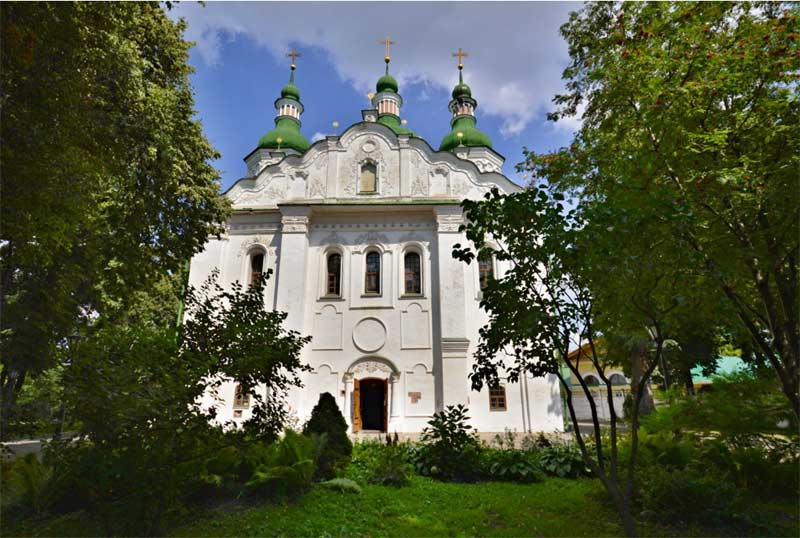
The monastery contains the famous St. Cyril's Church, an important specimen of Kievan Rus' architecture of the 12th century, and combining elements of the 17th and 19th centuries. Although the exterior is mainly Ukrainian Baroque the church retains its original Kievan Rus' interior.
Return to hotel for evening lecture followed by dinner at a local Kiev style restaurant.
day five
Breakfast and transfer to airport for flight back to London
Flights:
23 MAR LH 903 | LHR FRA | 10.30 13.05
23 MAR LH1494 | FRA KBP | 13.50 17.15
27 MAR LH1495 | KBP FRA | 17.35 19.15
27 MAR LH 920 | FRA LHR | 20.00 20.40