ITINERARY
Byzantine Monasteries of Serbia and Macedonia: Frescoes and Icons
Thursday 28th April – Thursday 5th May 2022
Price per person: £2,480 inclusive of airfares, hotel accommodation, transport, museum charges, breakfast and dinners
Single-room supplement £270
For further information and to reserve a place please contact info@templegallery.com
day one
Thursday 28 April
London – Skopje.
Night in Skopje
Our flight leaves London Heathrow for Skopje via Vienna.
28 Apr OS462 LHR VIE 16.15 19.35
28 Apr OS775 VIE SKP 22.30 23.55
day two
Friday 29 April
St. George church in Staro Nagoricane: Huge early 14th century church with one of the largest preserved ensembles of medieval frescoes.
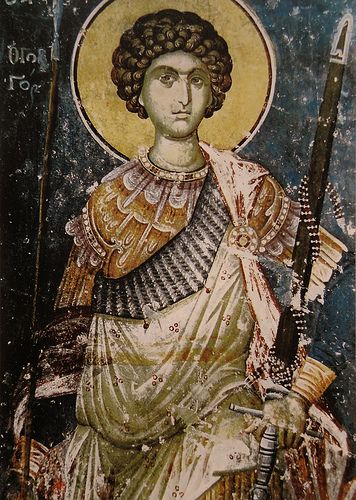
Staro Nagoricane, 14th century fresco of St George
Brief visit to National Gallery of Macedonia, Byzantine and Cretan icons.
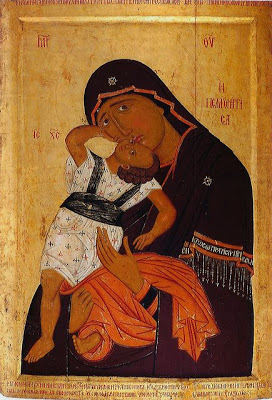
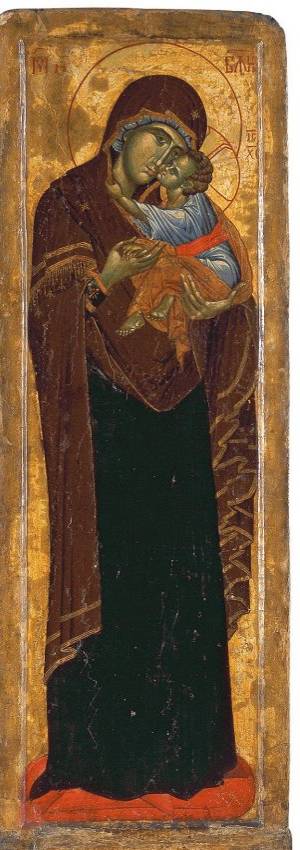
Virgin Pelagonitissa 1421; National Gallery of Macedonia
St Panteleimon church, Nerezi; Byzantine monastery, founded by the Prince Alexios Komnenos, the grandson of Alexios I Komnenos (reg 1081–1112). The date 1164 is given on the lintel of the church’s main door. The interior has some of the finest frescoes in Macedonia, executed by a 12th century artist from Constantinople.
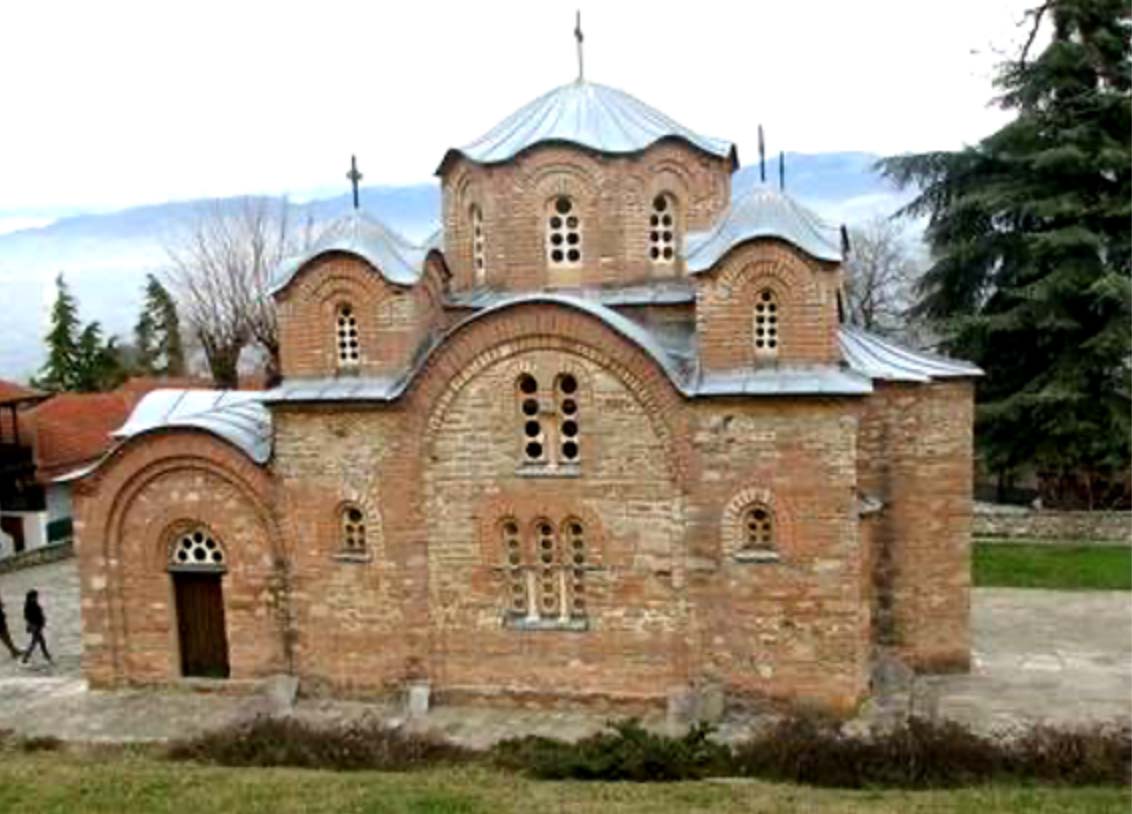
Church of St Panteleimon, 12th century
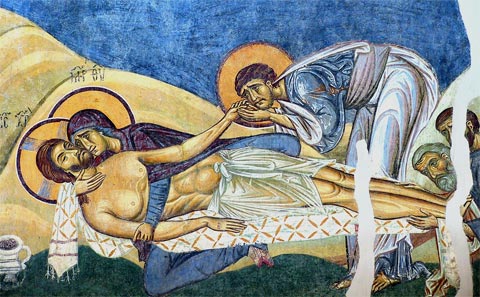
Lamentation of Christ, 12th century fresco. Church of St Panteleimon.
Night in Skopje
day three
Saturday 30 April
Skopje 87 km to Gračanica Monastery
Gračanica Monastery. Built by Stefan Milutin (1253 – 1321) the greatest of the medieval Kings of Serbia today a UNESCO World Heritage site. (Vespers in monastery?).
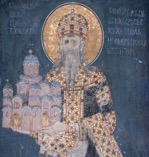
Gračanica’s founder Stefan Milutin.
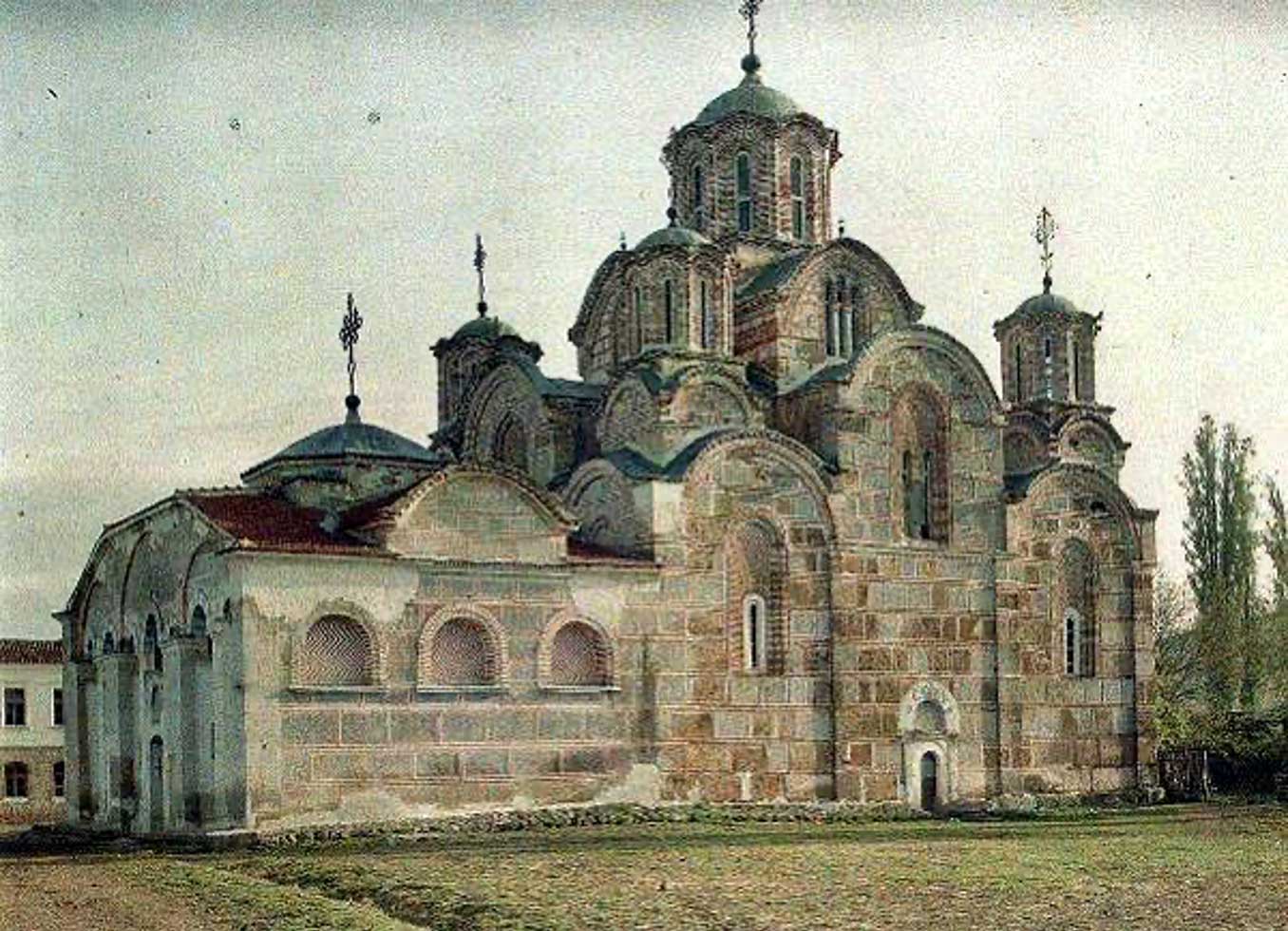
Gračanica, Serbo-Byzantine architecture.
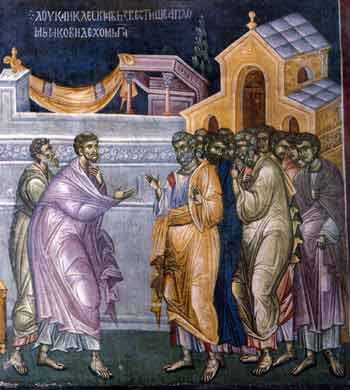
Gračanica Monastery interior with early 14th century frescoes.
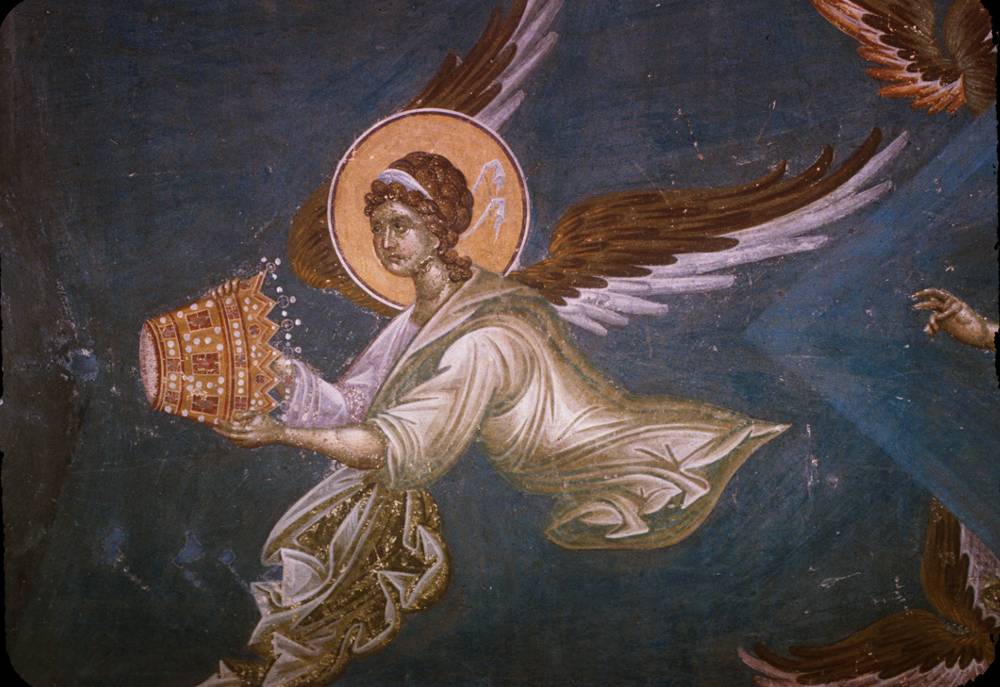
Gračanica Monstery interior with early 14th century frescoes.
Coach 85 km to Pec
Night in Pec.
day four
Sunday 1 May
Patriarchal Monastery of Peć, 13th to 14th centuries. A UNESCO World Heritage site.
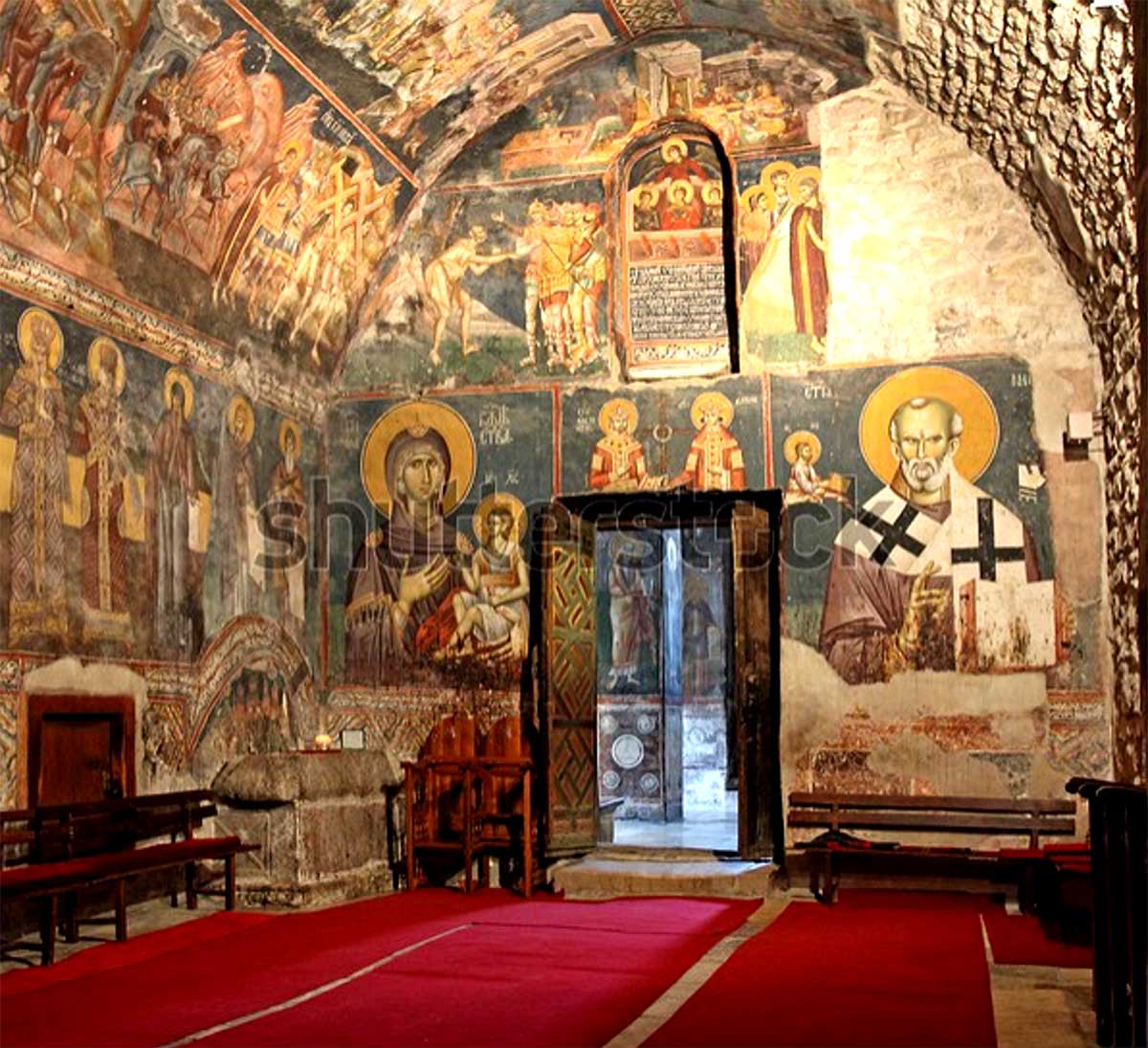
Pec, 14th century frescoes
Visoki Dečani Monastery. Founded by the Serbian medieval king, St. Stefan III Dečanski in 1335, it is the only Serbian monastery to have been continuously inhabited during the Ottoman occupation and later under Communism. This unbroken monastic presence endows the monastery with an immensely rich historical and spiritual treasury, including well preserved Byzantine frescoes, liturgical objects and manuscripts. A UNESCO World Heritage site.
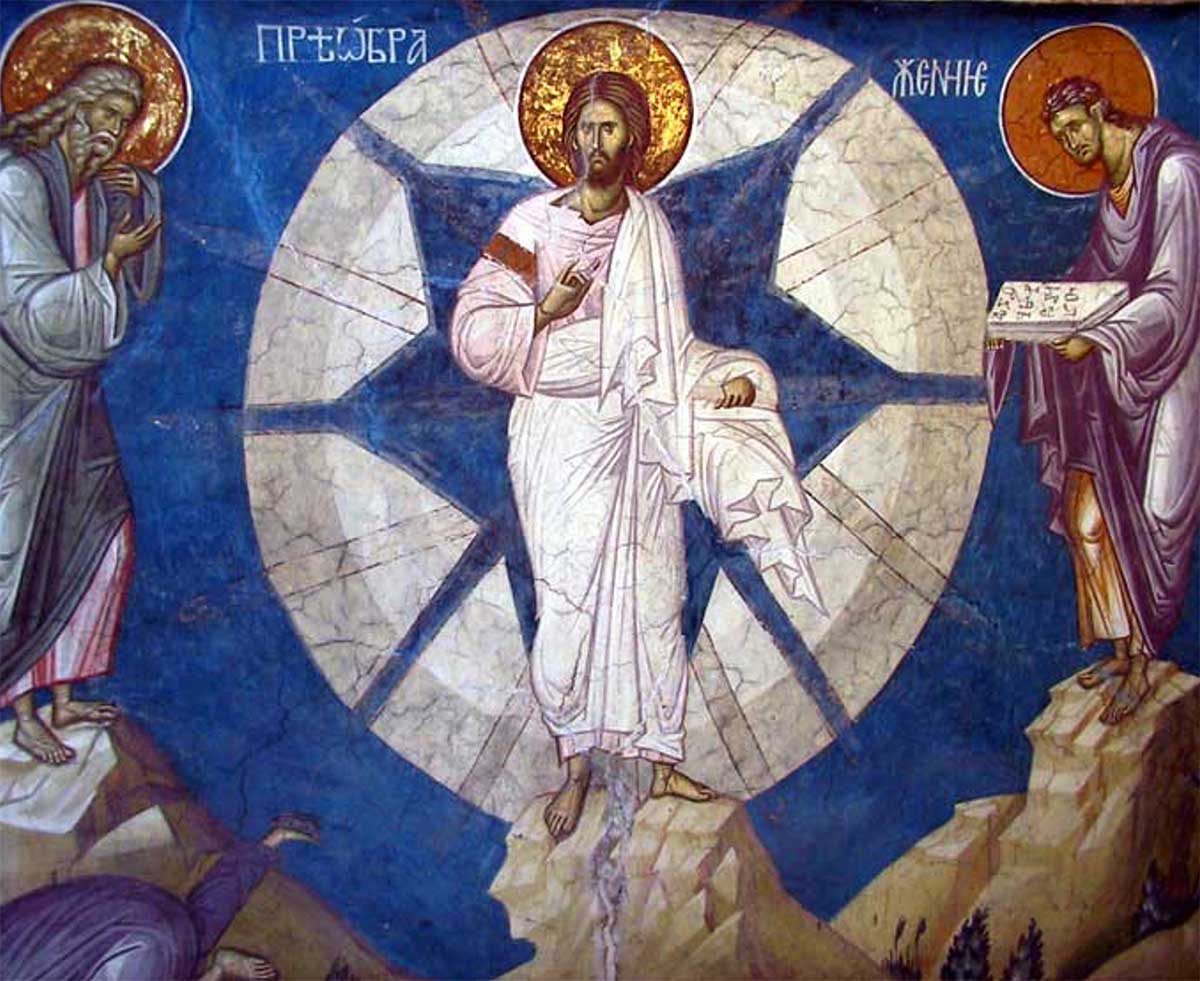
Dečani, Transfiguration, 14th century.
The ensemble of 14th century frescoes in the cathedral of Dečani is the work of a very great artist such as only Constantinople could produce. They are remarkable for their great boldness and originality of composition.
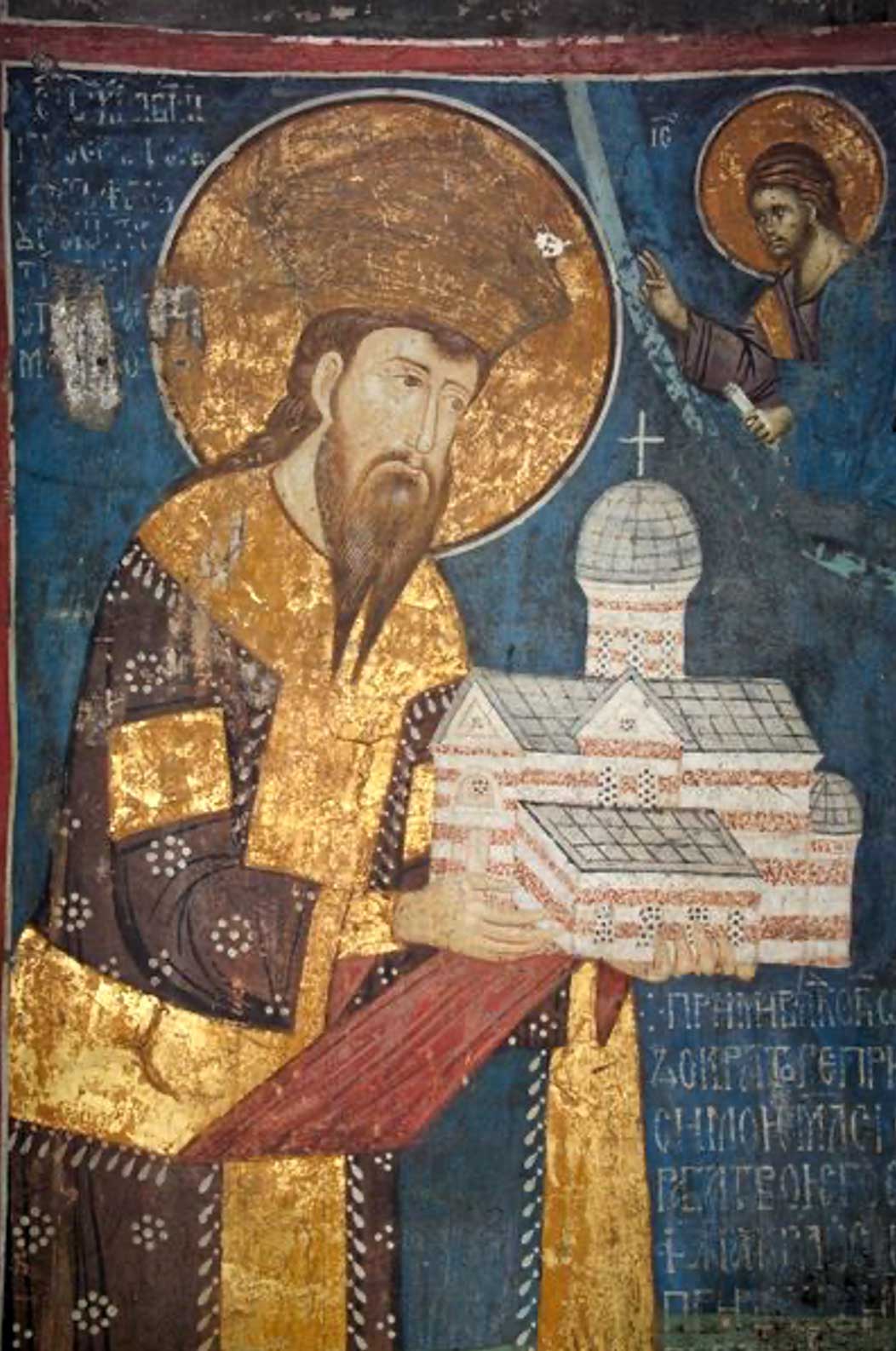
Dečani. King Stefan III, founder of Dečani, presents his monastery to Christ.
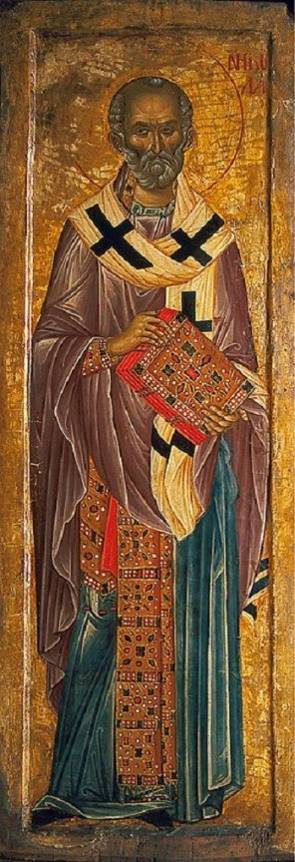
Decani. Monumental 14th century Byzantine icons.
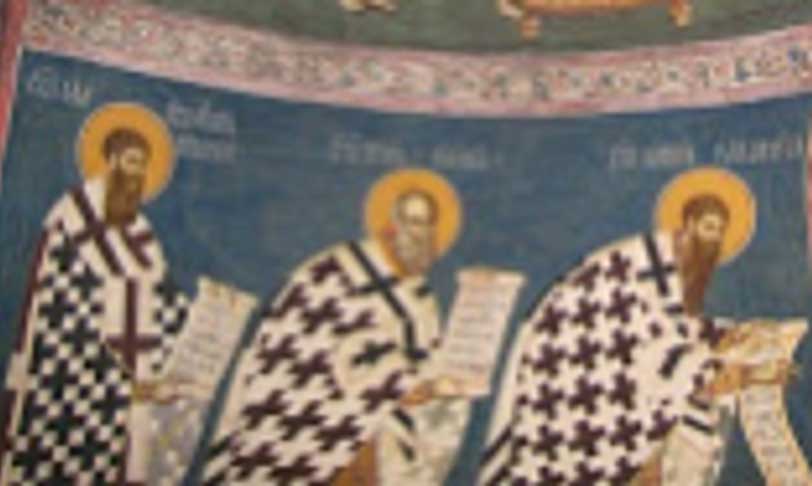
Dečani. Frescoes of Bishops. 14th century
Return to Skopje. Night in Skopje.
day five
Monday 2 May
Skopje to Ohrid. Museum of Icons.
Depart Skopje at 09:00 and arrive in Ohrid at 12:15. We have a quick lunch and then head into the old town to visit
St. Demetrios
St. Constantine and Helen church
We return to the hotel to freshen up and evening talk before dinner at a nearby restaurant.
Night in Ohrid
day six
Tuesday 3 May
Depart hotel and make our way into the old town to visit:
The Icon Gallery, Ohrid. The historical importance and quality of the icons in Ohrid stand at the same level as those in Saint Catherine’s Monastery on Sinai, the Tretyakov Gallery in Moscow or the Treasuries of Hilandar and Vatopedi on Mount Athos.
Christ Pantocrator, 1262
Virgin Hodegetria, 2nd half 13th century
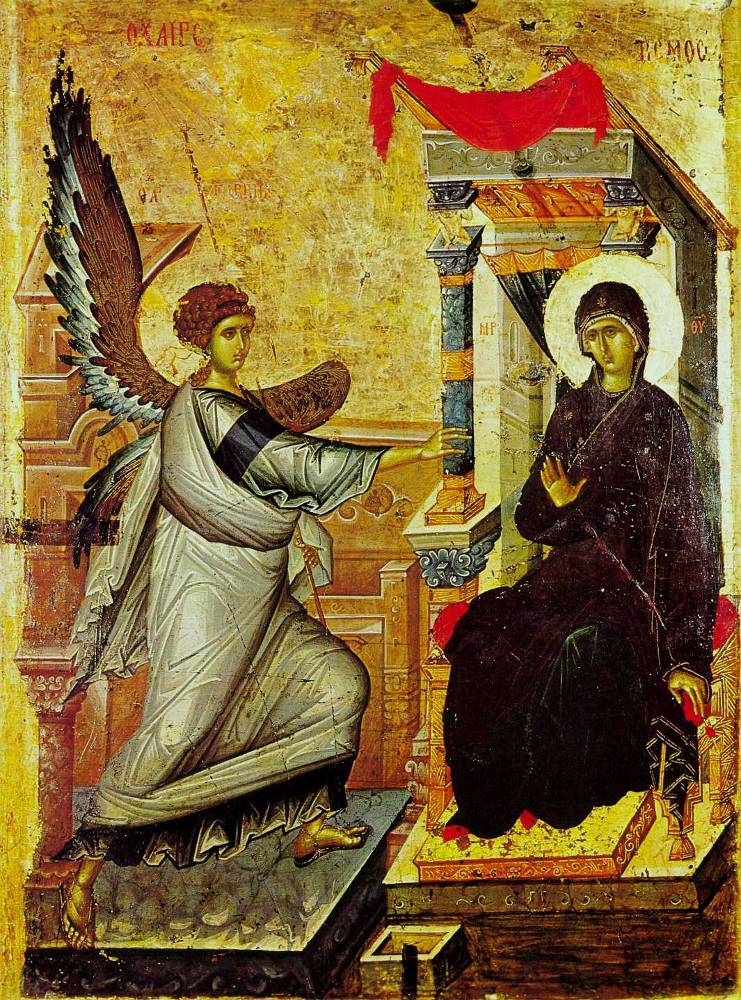
Annunciation, one of the supreme masterpieces of Constantinople in the Paleologan era (14th century)
Holy Virgin of Perivleptos (now St Kliment)
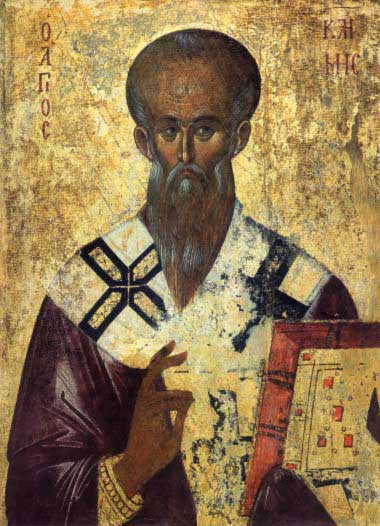
St Kliment
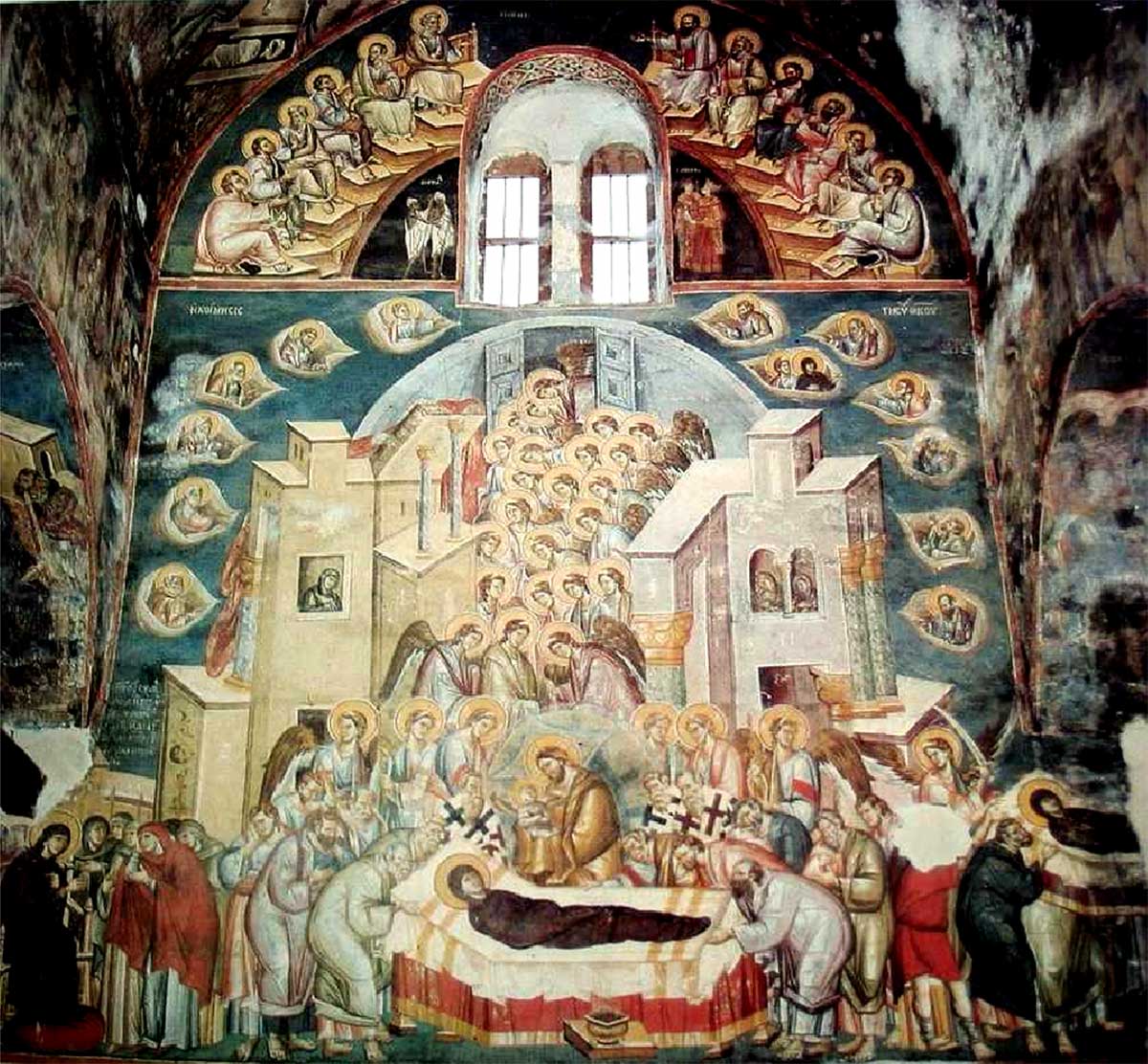
St. Sophia and medieval hospital churches
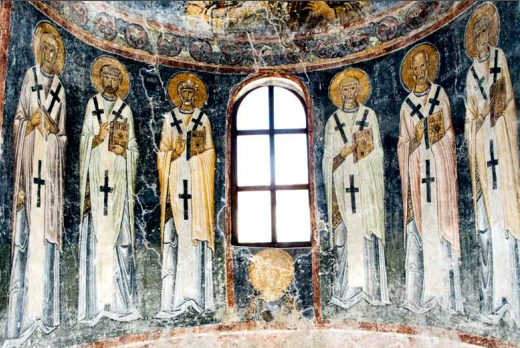
Saint Sophia
After lunch we depart Ohrid for Monastery of Saint Naum, located approximately one hour and thirty minutes south.
When we return from St Naum, we have some time for relax and refresh before evening talk. We then make our way to St John Kaneo located on the shore at the tip of Ohrid. Sunset is at 19:36 and we will eat at a restaurant 3 minutes walk from the church. (If preferred, we can easily move the visit to St John Kaneo to the morning.)
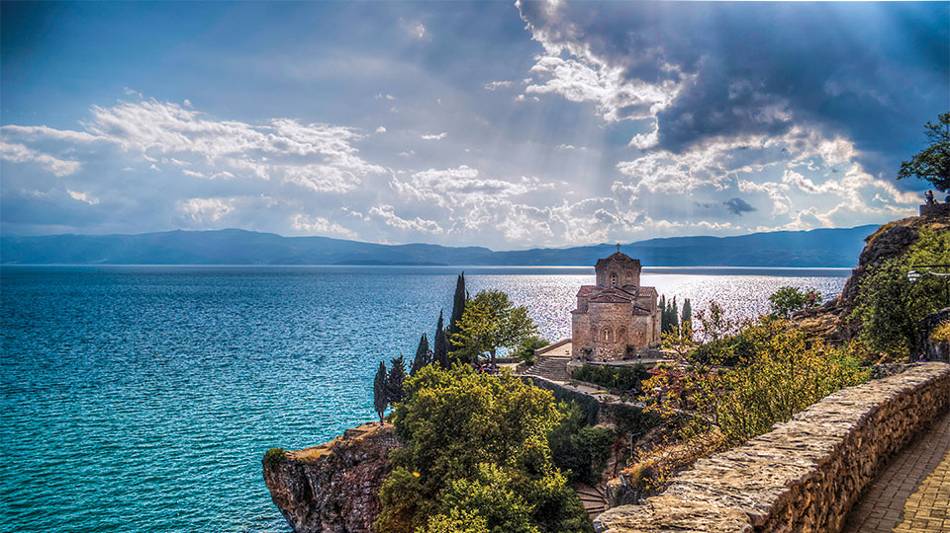
St John Kaneo
day seven
Wednesday 4 May
Breakfast and then we depart Ohrid for Church of St. George, Kurbinovo, located 1 hour 20 minutes southeast from Orhid town. Visit the monastery and then head to Heraclea Lyncestis, found just outside nearby Bitola (1 hour drive east). Lunch either before or after the visit.
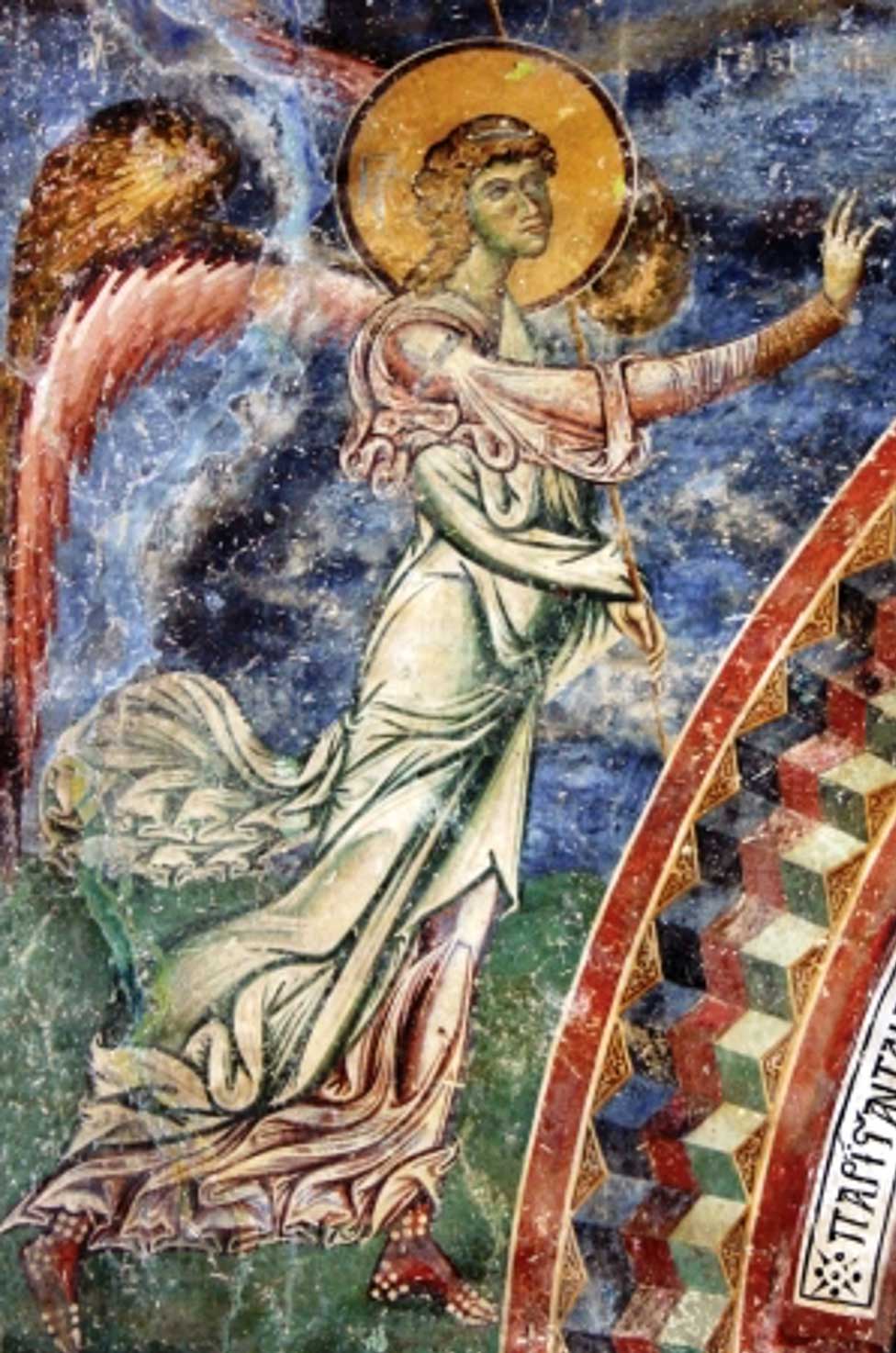
Church of St George Kurbinovo
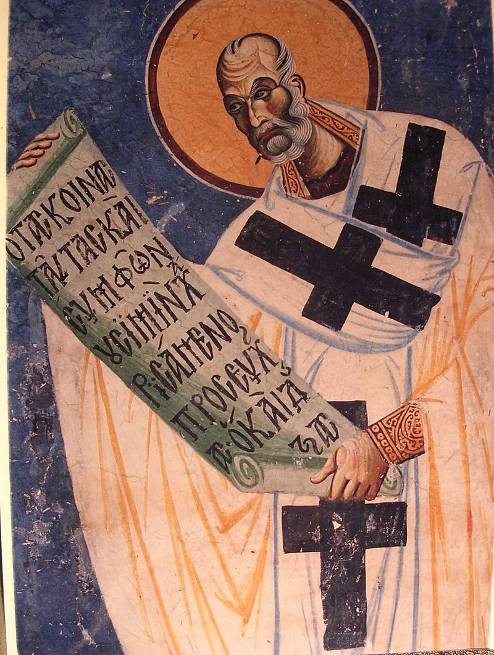
The frescoes in the church are considered among the best of the Macedonian Renaissance (867–1056) or Middle Byzantine period.
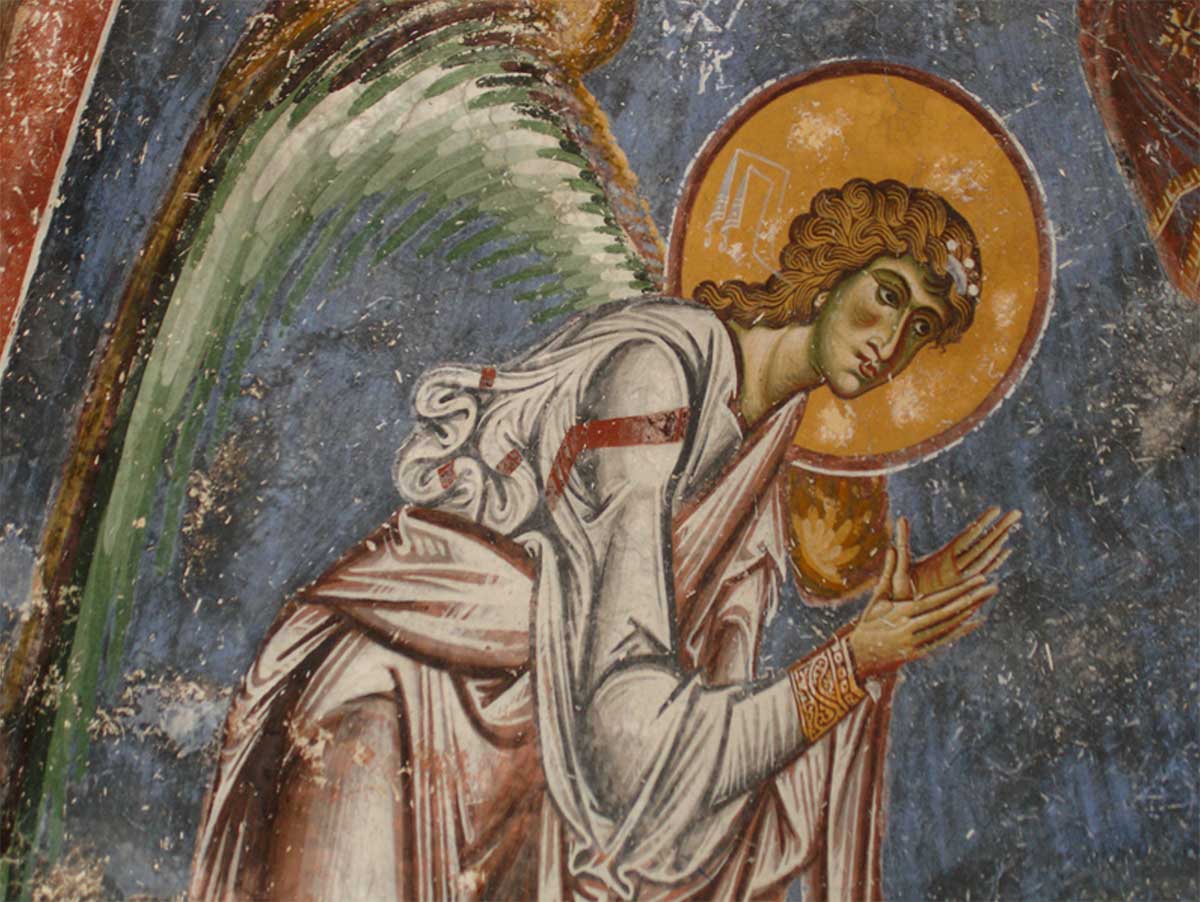
Kurbinovo. Archangel Gabriel, late 12th century.
After lunch we carry on in to Skopje, (2.5 hours). Along the route between Heraclea Lyncestis and Skopje is the site of Stobi. We will spend about an hour there and arrive at the Skopje hotel by 17:00. Check in and last night dinner.
day eight
Thursday 5 May
Breakfast at hotel and then 10.00 departure for Skopje International Airport and return flights to London Heathrow.